
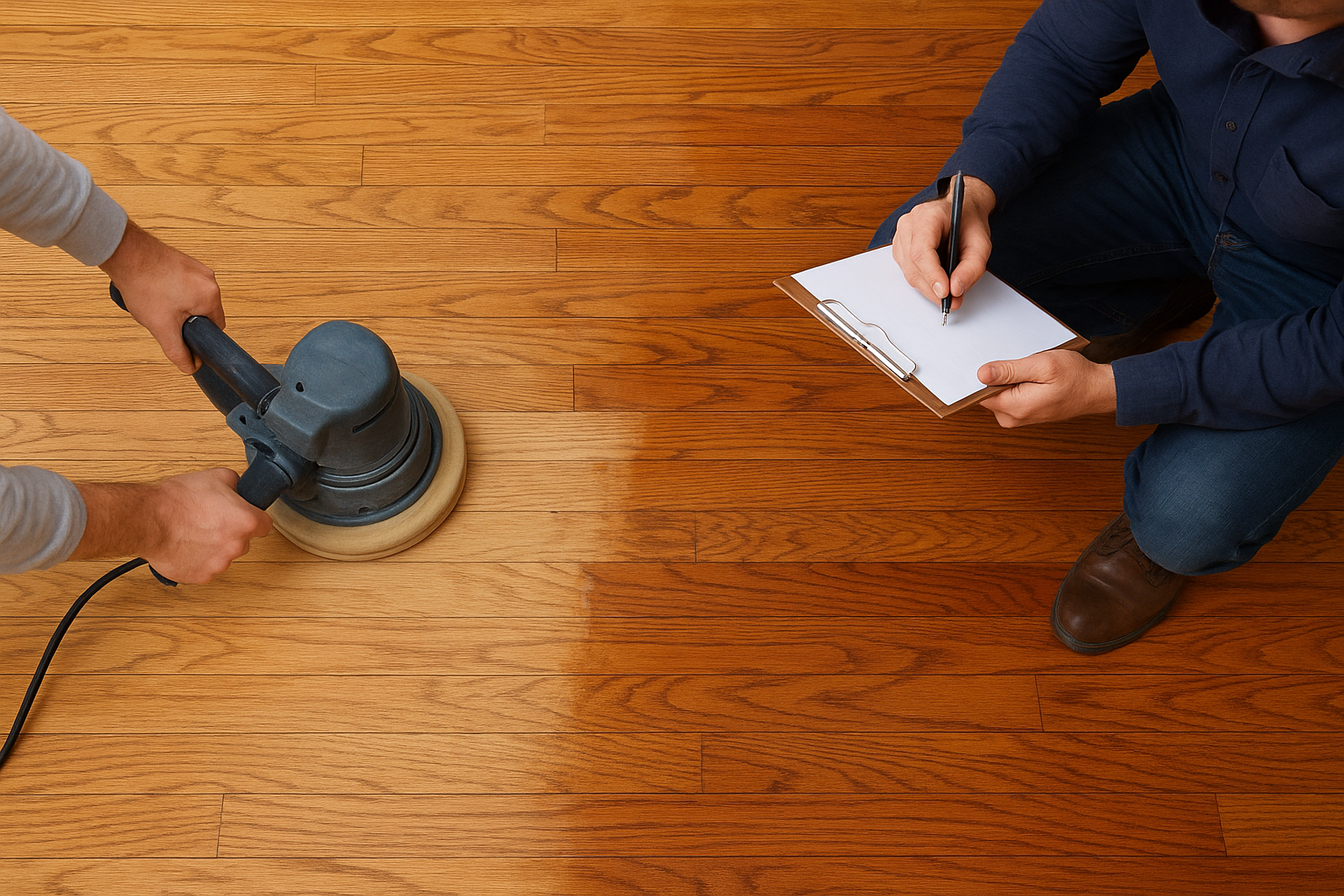
When your hardwood floors start showing their age, you’re faced with a decision that many homeowners struggle with: should you tackle the refinishing project yourself or call in a professional? It’s not just about the money—though that’s certainly important. Let’s break down what each option really costs you in terms of time, effort, and results.
The True Cost of DIY Floor Refinishing
At first glance, doing it yourself seems like the obvious money-saver. You’ll need to rent a drum sander (around $60-100 per day) and an edge sander (another $40-60 per day). Add in sandpaper, stain, polyurethane, brushes, and other supplies, and you’re looking at roughly $200-400 in materials for an average-sized room.
But here’s what the price tags don’t tell you: you’ll probably need that equipment for 3-4 days minimum, especially if this is your first time. Most DIYers underestimate how long the process takes. There’s the furniture moving, the meticulous sanding (which you’ll likely do multiple times to get it right), the staining, and then multiple coats of finish with drying time in between.
Time investment is where DIY gets expensive in ways that don’t show up on receipts. Plan on dedicating an entire long weekend—or more realistically, two weekends—to complete the job. That’s 20-30 hours of hands-on work, not counting the learning curve.
What Professional Refinishing Actually Costs
Professional floor refinishing typically runs between $3-8 per square foot, depending on your location and the floor’s condition. For a standard 300-square-foot room, you’re looking at $900-2,400. Yes, that’s significantly more than the DIY materials cost.
But professionals bring commercial-grade equipment, years of experience, and efficiency you simply can’t match. What takes you two weekends, they’ll complete in 2-3 days, often with superior results. They know exactly which grit sandpaper to use, how to handle tricky corners, and how to avoid common mistakes like gouging the wood or creating uneven patches.
Another factor people forget: professionals carry insurance. If something goes wrong—and with DIY projects, something often does—you’re on the hook for fixing it. A pro who accidentally damages something is covered.
The Hidden Costs Nobody Talks About
Let’s be honest about what can go wrong with DIY refinishing. Drum sanders are powerful machines that can quickly gouge your floor if you pause in one spot too long. I’ve seen homeowners create waves in their floors that required professional correction—costing more than if they’d hired someone from the start.
Then there’s the physical toll. Floor sanding is backbreaking work. You’re hunched over, breathing in dust (even with masks), and operating heavy equipment. If you have a bad back or knee issues, this might not just be difficult—it could lead to injury and medical bills.
Don’t forget about displaced family life. With DIY, your home is essentially a construction zone for weeks. Professional crews work faster, minimizing disruption. They also have industrial dust containment systems, while your DIY setup will leave fine dust settling throughout your house for months.
When DIY Makes Sense
DIY floor refinishing isn’t always a bad choice. It works well if you have a small space like a bathroom or closet where mistakes won’t be highly visible. It’s also reasonable if you’re genuinely interested in learning the skill and have time to practice technique.
If you’re handy, patient, and have successfully completed similar projects, you might achieve acceptable results. The key word is “acceptable”—DIY floors often look good from a distance but show amateur imperfections up close.
Budget-conscious homeowners with more time than money might reasonably choose DIY, especially if the floors will undergo more wear and tear soon (like if you have young kids or large dogs). Why pay for perfection if it won’t last?
When to Definitely Hire a Professional
Some situations practically demand professional help. If your floors have deep scratches, water damage, or need board replacement, you need expert assessment and repair. Professionals can also handle exotic hardwoods that require special treatment.
High-traffic areas like living rooms and entryways deserve professional attention because imperfections will be obvious. Similarly, if you’re preparing to sell your home, professional refinishing offers better ROI—buyers notice quality.
Time-crunched homeowners should also hire out. If you can’t dedicate full weekends to the project, DIY refinishing will drag on for months, creating ongoing stress and an unusable space.
Cost Comparison Chart
| Factor | DIY Refinishing | Professional Refinishing |
|---|---|---|
| Material/Labor Cost (300 sq ft) | $300-500 | $900-2,400 |
| Time Investment | 20-30 hours over 2 weekends | 2-3 days (minimal homeowner time) |
| Equipment Quality | Rental-grade, basic | Commercial-grade, advanced |
| Skill Level Required | Moderate to high (steep learning curve) | None (you just choose finish) |
| Result Quality | Variable (often visible imperfections) | Consistent, professional finish |
| Risk of Mistakes | High (can damage floors permanently) | Low (insured, experienced) |
| Physical Demand | Very high (backbreaking work) | None |
| Dust Control | Basic (dust spreads throughout home) | Advanced containment systems |
The Verdict: Which Option Wins?
Here’s the bottom line: DIY floor refinishing saves money upfront but costs you in time, effort, and potentially quality. If you value your weekends, want guaranteed results, and can afford the investment, hiring a professional is worth every penny.
However, if you’re genuinely interested in learning a new skill, have a forgiving practice space, and understand you might not achieve perfection, DIY can be a rewarding challenge. Just go in with realistic expectations and a backup budget in case you need professional help to fix mistakes.
For most homeowners, the middle ground makes sense: hire professionals for main living areas where quality matters most, and consider DIY for less visible spaces where you can practice without high stakes. Your floors are a major feature of your home—choose the approach that matches both your budget and your expectations for the final result.
Frequently Asked Questions
How long do refinished floors last?
Professionally refinished floors typically last 7-10 years before needing attention, while DIY jobs may show wear sooner depending on technique quality. Proper maintenance extends either option’s lifespan significantly.
Can I stay in my home during floor refinishing?
With professional refinishing, you’ll need to stay off the floors for 24-48 hours and keep the area well-ventilated for several days due to polyurethane fumes. DIY projects take longer, extending this inconvenience. Some families temporarily relocate, especially with children or pets.
What’s the biggest mistake DIYers make?
The most common error is sanding unevenly or leaving the drum sander stationary too long, creating gouges or dips. Another frequent mistake is applying stain or finish too thickly, leading to a tacky or uneven appearance. Patience and constant movement are crucial.
How many times can hardwood floors be refinished?
Most solid hardwood floors can be refinished 4-6 times over their lifetime, depending on the wood thickness. Each refinishing removes about 1/16 inch of wood. Engineered hardwood has a thinner top layer and can typically only be refinished 1-2 times, if at all.
Is dustless floor refinishing worth the extra cost?
If available in your area, dustless (or dust-containment) refinishing costs 10-20% more but dramatically reduces cleanup and dust infiltration into your home’s ventilation system, furniture, and belongings. For occupied homes, it’s usually worth the investment.
Should I refinish or replace my hardwood floors?
Refinishing makes sense when floors are structurally sound but cosmetically worn. Replace floors if you have widespread water damage, extensive board warping, or if the wood has been refinished too many times already. Refinishing costs roughly 25-50% of replacement costs, making it the preferred option when viable.