
“`html
If you’re planning to refinish your hardwood floors, one of the first questions that probably comes to mind is: how long is this actually going to take? It’s a fair question. You’ve got a household to run, maybe pets, kids, or just a general aversion to living out of boxes for weeks on end. The good news is that hardwood floor refinishing isn’t usually the months-long ordeal some people imagine, but it’s also not a one-afternoon job either. Let’s break down what really goes into the timeline so you can plan accordingly.
The Short Answer
For a typical room or a moderately sized home, hardwood floor refinishing takes anywhere from 3 to 7 days from start to finish. That includes prep work, sanding, staining (if you’re changing the color), applying finish coats, and drying time. Smaller spaces might wrap up in a couple of days, while larger homes with multiple rooms can stretch closer to a week or more.
What Actually Happens During the Process
Refinishing isn’t just “sand it and seal it.” There are several distinct stages, and each one adds time to the overall project.
1. Preparation
Before any sanding begins, furniture needs to be moved out, rooms need to be cleared, and the space has to be sealed off from the rest of the house to control dust. This part usually takes half a day, depending on how much stuff you’ve got.
2. Sanding
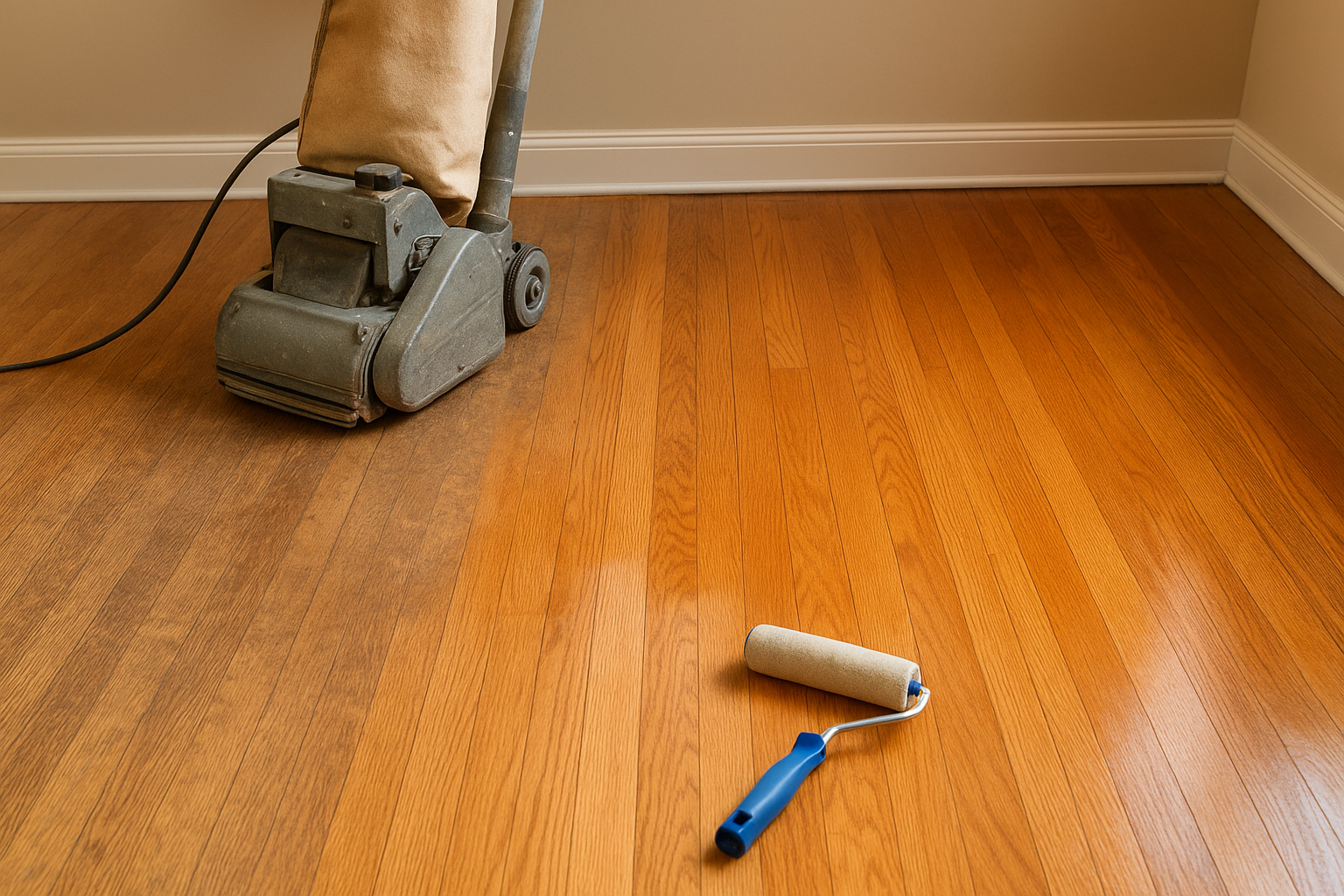
This is often the most time-consuming step. Old finish, scratches, and imperfections get sanded away in multiple passes using progressively finer grits. For an average-sized room, sanding can take a full day. Larger areas or floors with deep damage may need extra time.
3. Staining (Optional)
If you’re changing the color of your floors, staining adds another day to the process, plus drying time before the finish coats go on. Skipping this step if you’re keeping the natural wood tone will save you time.
4. Applying Finish Coats
This is where the floors get their protective top layer. Most jobs require 2 to 3 coats of polyurethane or another finish, and each coat needs to dry before the next one goes on. Depending on the product used, this drying time can range from a few hours to overnight per coat.
5. Curing Time
Here’s the part people often overlook. While the finish may feel dry to the touch within a day, it needs much longer to fully cure and harden. You can usually walk on the floors in socks within 24 hours, but heavy furniture shouldn’t go back for a few weeks in some cases, depending on the product.
Factors That Affect the Timeline
Not every refinishing job looks the same, and several variables can stretch or shrink the schedule.
Size of the area – Obviously, more square footage means more time for sanding and coating.
Condition of the existing floor – Floors with deep gouges, water damage, or multiple old layers of finish take longer to sand down properly.
Type of finish used – Oil-based polyurethane generally takes longer to dry between coats than water-based options, though it’s often considered more durable.
Humidity and temperature – Weather conditions in your home can speed up or slow down drying and curing times significantly.
Dustless vs. traditional sanding – Dustless sanding systems can sometimes streamline the process and reduce cleanup time afterward.
Comparison Chart: Typical Refinishing Timeline by Room Size
| Area Size | Sanding Time | Finish Coats Time | Total Estimated Days |
|---|---|---|---|
| Single Room (up to 300 sq ft) | 1 day | 1–2 days | 2–3 days |
| Whole Floor (1,000–1,500 sq ft) | 1–2 days | 2–3 days | 3–5 days |
| Entire Home (2,000+ sq ft) | 2–3 days | 3–4 days | 5–7 days |
Can You Speed Up the Process?
Somewhat. Choosing a water-based finish instead of oil-based can cut drying time significantly since it dries faster between coats. Hiring an experienced crew with proper equipment also helps things move efficiently. That said, trying to rush the curing stage is where people run into trouble — moving furniture back too soon or walking on the floor in shoes before it’s fully hardened can leave marks or damage the finish.
Living Through the Process
Most homeowners choose to stay elsewhere, at least for the first day or two, mainly because of the dust and fumes from sanding and staining. Once the finish coats are curing, the smell diminishes, and it becomes more livable, though you’ll still want to avoid walking through the area unnecessarily.
FAQ
Q: Can I walk on my floors the day after refinishing?
A: Generally yes, in socks only, but it’s best to avoid heavy foot traffic for at least 24–48 hours.
Q: How soon can I put furniture back?
A: Most professionals recommend waiting at least 1–2 weeks, though some finishes require up to 30 days for a full cure.
Q: Does refinishing smell bad?
A: Oil-based finishes have a stronger odor and may linger for a few days. Water-based finishes tend to have a milder smell that dissipates faster.
Q: Is it faster to just do one room at a time?
A: It can reduce the amount of time you’re displaced from the room, but overall, it may take longer in total since contractors have to set up and break down multiple times.
At the end of the day, patience pays off when it comes to hardwood floor refinishing. Rushing through drying or curing stages can undo all the hard work that went into making your floors look brand new. Planning for about a week of disruption, with some flexibility built in for drying times, will set you up for the best results.
“`