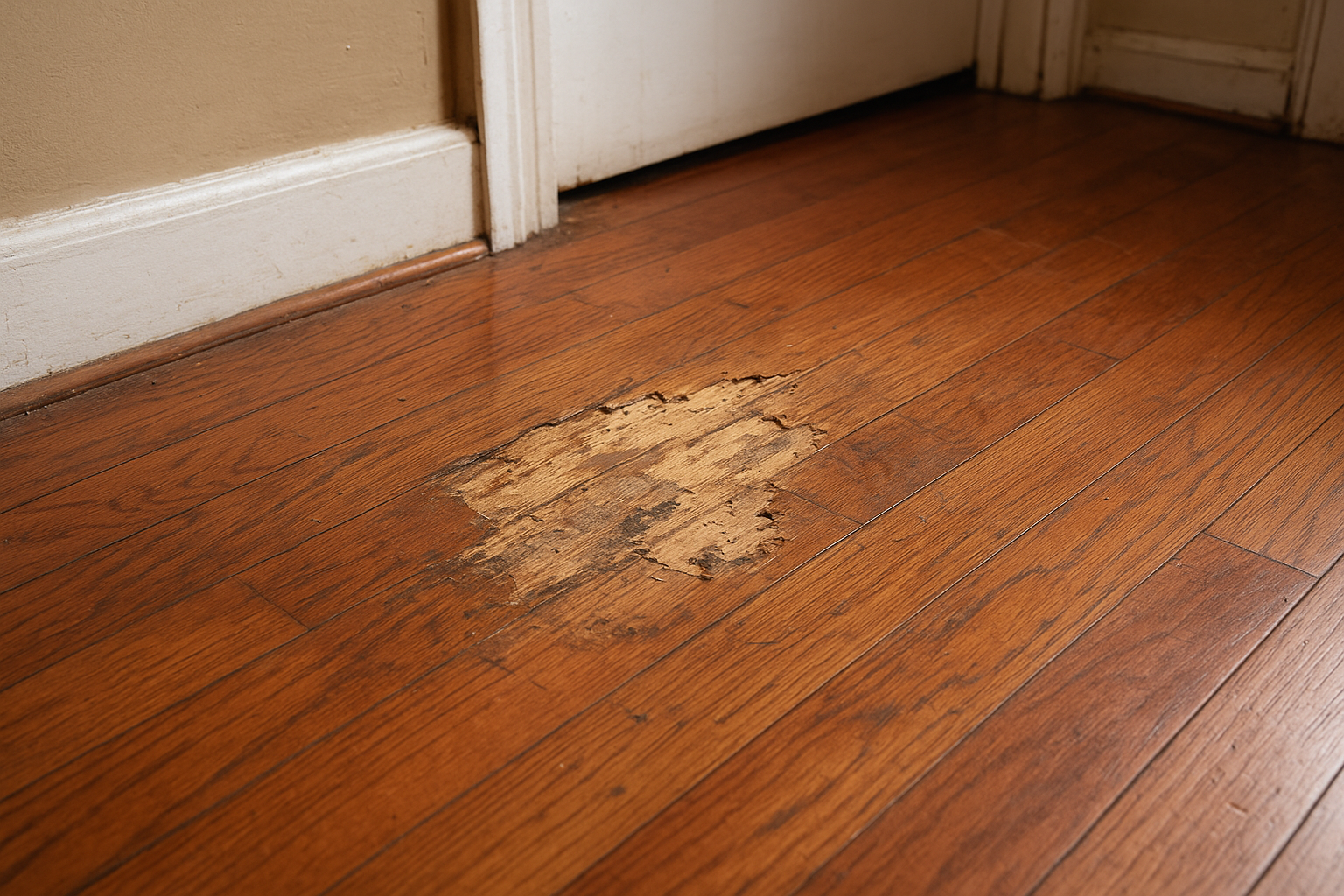
If you’ve ever walked into a home and gasped at the condition of the hardwood floors, you’re not alone. In my years working with Bay Area homeowners, I’ve witnessed some truly shocking floor disasters that could have been easily prevented. Today, I’m sharing five of the most common hardwood floor horror stories we’ve encountered – and more importantly, how you can avoid becoming another cautionary tale.
1. The Water Damage Nightmare
Picture this: A beautiful Craftsman home in Oakland with original 1920s oak flooring that had been destroyed by an undetected dishwasher leak. By the time the homeowners noticed, the water had seeped under the floorboards for months, causing warping, cupping, and black mold growth that required replacing nearly 400 square feet of irreplaceable hardwood.
How to Avoid It: Regularly inspect areas around sinks, dishwashers, refrigerators, and washing machines for signs of moisture. Place water sensors near appliances, and never ignore even minor leaks. If you spot water on your hardwood, dry it immediately and use fans to ensure complete moisture removal within 24 hours.
2. The DIY Refinishing Disaster
A well-intentioned couple in San Jose decided to save money by refinishing their hardwood floors themselves. Without proper equipment or experience, they created deep gouges from improper sanding technique, applied stain unevenly, and used incompatible products that resulted in a sticky, never-fully-cured finish. The repair cost was triple what professional refinishing would have been.
How to Avoid It: Hardwood floor refinishing requires specialized equipment, knowledge, and skill. Unless you have professional experience, hire qualified refinishers who understand wood species, grain patterns, and proper finishing techniques. A professional job pays for itself in longevity and quality.
3. The Pet Stain Catastrophe
In a beautiful Victorian in San Francisco, we discovered floors that looked decent at first glance but emitted an overwhelming pet odor. Years of pet accidents had penetrated deep into the wood, creating dark stains and permanent odor that surface cleaning couldn’t fix. The only solution was replacing affected boards and treating the subfloor with enzymatic cleaners.
How to Avoid It: Clean pet accidents immediately using enzyme-based cleaners specifically designed for hardwood. Never let urine sit on wood floors, as it penetrates quickly. Consider area rugs in high-traffic pet areas, and maintain a protective floor finish. For persistent issues, consult with flooring professionals about specialized sealers.
4. The Steam Mop Mistake
A homeowner in Palo Alto religiously cleaned her beautiful Brazilian cherry floors with a popular steam mop, thinking she was doing the right thing. Within two years, the excessive moisture caused the finish to cloud and peel, the boards to swell at the seams, and required complete refinishing of the entire first floor.
How to Avoid It: Never use steam mops, wet mops, or excessive water on hardwood floors. Instead, sweep or vacuum regularly and use a barely damp microfiber mop with hardwood-specific cleaners. The wood should be dry to the touch within seconds of cleaning. Remember: water is hardwood’s biggest enemy.
5. The Furniture Drag Marks of Doom
After hosting a large party, a Berkeley homeowner moved heavy furniture without protection, leaving deep scratches and gouges across the entire living room floor. What seemed like a minor oversight resulted in visible damage that significantly decreased the home’s value and required extensive repair work.
How to Avoid It: Always use felt pads under furniture legs and replace them annually. When moving furniture, lift rather than drag, or use furniture sliders designed for hardwood. Place protective mats under rolling chairs, and trim pet nails regularly to prevent scratching.
Prevention vs. Repair: What Bay Area Homeowners Should Know
| Issue | Prevention Cost | Repair Cost | Time to Fix |
|---|---|---|---|
| Water Damage | $50-100 (water sensors) | $2,000-8,000+ | 3-7 days |
| DIY Refinishing Gone Wrong | $1,500-3,000 (professional job) | $3,000-6,000+ | 5-10 days |
| Pet Stains | $20-50 (proper cleaners) | $1,000-5,000+ | 2-5 days |
| Steam Mop Damage | $30-60 (proper cleaning supplies) | $2,500-5,000+ | 3-5 days |
| Furniture Scratches | $20-40 (felt pads & sliders) | $500-3,000+ | 1-3 days |
Frequently Asked Questions
Q: How often should I refinish my hardwood floors?
A: Most hardwood floors need refinishing every 7-10 years with normal wear, though high-traffic areas may require it sooner. Look for signs like widespread scratching, dull appearance, or exposed wood where the finish has worn away.
Q: Can all hardwood floor damage be repaired?
A: Most damage can be repaired, but the extent and cost vary. Surface scratches are easily buffed out, while deep water damage or severe pet staining may require board replacement. Severe cases might necessitate complete floor replacement.
Q: What’s the best way to protect hardwood floors in Bay Area homes?
A: Use area rugs in high-traffic zones, maintain proper humidity levels (45-55%), clean spills immediately, use felt pads under furniture, and avoid wearing shoes indoors. Regular maintenance and prompt attention to issues prevent major problems.
Q: Are engineered hardwood floors more resistant to these problems?
A: Engineered hardwood offers better moisture resistance than solid hardwood, making it less susceptible to humidity-related issues. However, it still requires proper care and can be damaged by water, scratches, and improper cleaning methods.
Q: How can I tell if my hardwood floors have hidden damage?
A: Look for discoloration, soft spots when walking, unusual odors, visible cupping or crowning, squeaking sounds, or gaps between boards. If you suspect hidden damage, consult a flooring professional for a thorough inspection.
The beautiful hardwood floors in Bay Area homes are an investment worth protecting. By learning from these horror stories and implementing proper preventive measures, you can keep your floors looking stunning for decades. Remember, a little prevention goes a long way – and it’s always cheaper than repair. Your floors will thank you for the extra care and attention!